


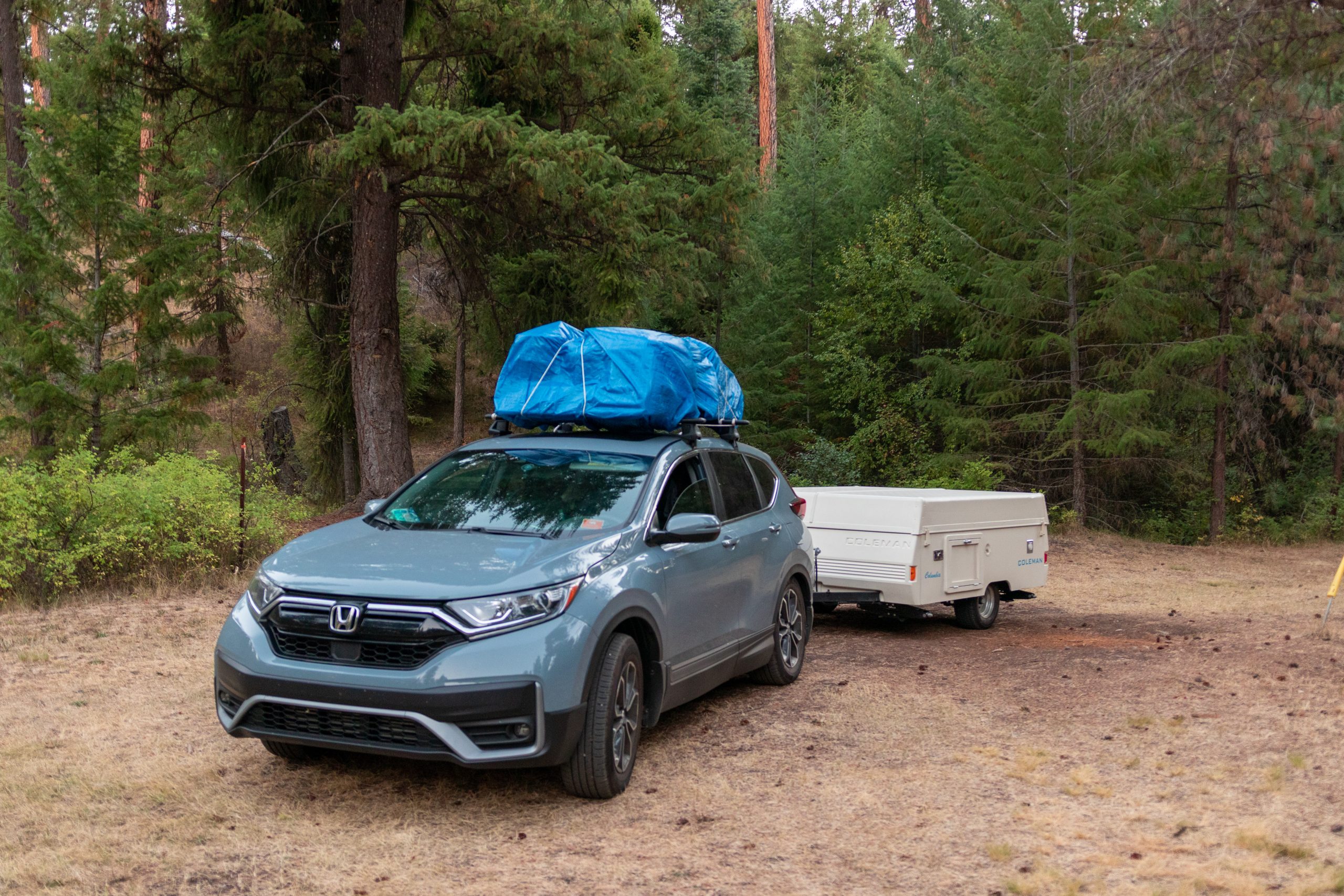
Towing a camper or boat should feel controlled and predictable. But for a lot of truck and SUV owners, the reality looks more like rear-end squat, wandering steering, and that uneasy feeling when wind or traffic starts pushing things around.
Sag and sway aren’t just annoying—they’re signs your suspension is being asked to do more than it comfortably can. The good news is that both issues are common, well-understood, and very fixable once you know what’s causing them.
Let’s break down why sag and sway happen when towing, and what actually helps reduce them.
When you hook up a trailer, you’re adding tongue weight directly behind the rear axle. That weight acts like a lever, pushing the rear of the vehicle down and lifting the front slightly.
As sag increases, several things happen at once:
Even if your vehicle is technically rated to tow the load, factory suspension systems are often tuned for unloaded driving. Add consistent tongue weight, and sag becomes inevitable.
Sway is different from sag, but the two are closely related.
Sway happens when the suspension can’t control side-to-side movement effectively. Common contributors include:
Once the suspension is overloaded, it has less ability to manage these dynamic forces. That’s when towing starts to feel stressful instead of stable.
Sag and sway usually go hand in hand. When the rear suspension is already compressed from tongue weight, it has less travel available to control movement.
That means:
Fixing sway without addressing sag—or vice versa—often leads to mixed results. The most effective solutions address both.
Before diving into suspension upgrades, there are a few basics worth confirming:
If all of those are in order and sag or sway is still an issue, it’s usually a suspension limitation—not a setup mistake.
SumoSprings are designed to support the suspension as it works, not replace it or over-stiffen it.
Because they’re progressive, they engage gradually as weight and movement increase. That makes a noticeable difference when towing.
Here’s how they help specifically with camper and boat towing:
One of the biggest changes people notice after adding suspension support isn’t just physical—it’s mental.
When sag is reduced and sway is controlled:
That “white-knuckle” feeling fades, replaced by a sense that the vehicle and trailer are working together instead of fighting each other.
If towing a camper or boat consistently causes:
…it’s a sign your suspension needs additional support.
Towing doesn’t have to feel tense or unpredictable. With the right suspension setup, it can feel stable, controlled, and comfortable—exactly the way it should.

 English English
  Spanish
  French
  German
  Italian English English Spanish
French
German
Italian
Italian English English Spanish
French
German
Italian

Join our email list for the latest news, tips, blog posts, and deals!